Stick Family Life: Celebrate Togetherness Visually
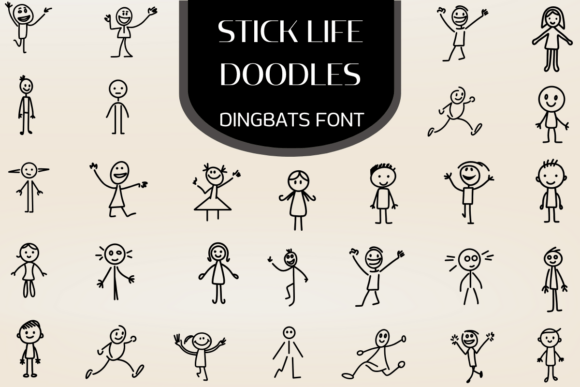
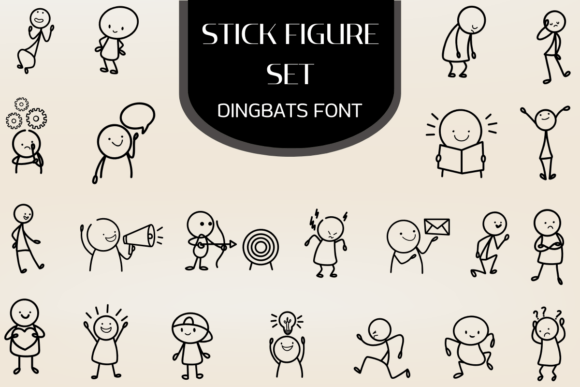
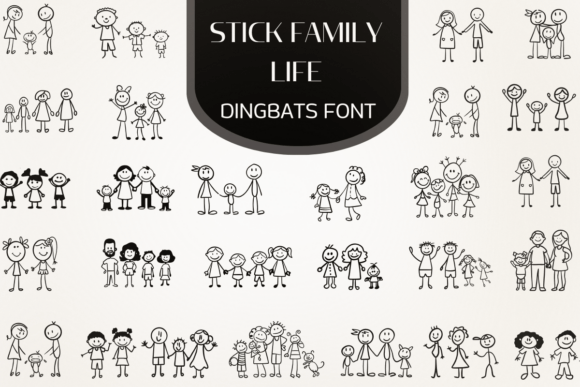
Imagine typing a single letter—and instantly seeing a smiling stick-figure parent holding hands with two children, or a tiny baby cradled in arms, or a dog wagging its tail beside a family group. That’s the quiet magic of Stick Family Life: a thoughtfully crafted dingbat font designed not to spell words, but to express warmth, connection, and shared life moments through simple, hand-drawn icons.
What It Is—And Why It Feels So Right
Stick Family Life isn’t a decorative script or a bold display typeface. It’s a collection of scalable, vector-based illustrations—each mapped to a keyboard character—that represent real-life family dynamics: same-sex parents, multigenerational households, single caregivers, blended families, pets as beloved members, and milestones like newborns, birthdays, and reunions. Every figure is drawn with gentle lines, subtle asymmetry, and intentional softness—no rigid geometry, no sterile perfection. That’s by design. It invites recognition, not just observation.
The appeal lies in its sincerity. In a digital world full of polished stock imagery and AI-generated scenes, these figures feel handmade, humble, and human. They don’t shout—they smile, hold hands, sit together on a porch swing, or walk side by side. That authenticity resonates deeply whether you’re designing for your own family or communicating with an entire community.
Where It Fits Naturally—in Life and Work
For creators and small business owners, Stick Family Life bridges the gap between concept and connection. A wedding planner adds a row of linked stick figures along the bottom of a “save the date” email—no illustration skills needed. A pediatric clinic uses the font in patient education handouts: a parent-and-child icon next to “Well-Visit Checklist,” a stethoscope-and-heart icon beside “Emotional Wellness Tips.” The visuals land faster than text alone—and they do it without assumptions or stereotypes.
Hobbyists and educators love how effortlessly it supports storytelling. One teacher prints a set of family icons on cardstock and uses them in social-emotional learning activities—students arrange figures to reflect their own households or build empathy by imagining others’ experiences. A blogger documenting her journey through infertility incorporates a subtle baby-in-arms glyph into her newsletter footer—not as a statement, but as a quiet, tender acknowledgment.
Small businesses use it thoughtfully too. A local bakery prints custom aprons for staff with a line of stick figures holding rolling pins and cake slices. A nonprofit running after-school programs places a diverse cluster of child-and-adult icons on their intake forms—softening what can feel like a clinical process. Even digital designers lean on it: pairing Stick Family Life with a clean sans-serif like Inter or a relaxed handwritten font creates layouts that feel both modern and grounded.
Real-Life Uses You Can Start With Today
- Personal keepsakes: Embroider stick-figure silhouettes onto a baby blanket using embroidery software that supports fonts; add a matching family glyph to the tag.
- Community signage: A neighborhood center prints laminated posters showing “Library Hours” alongside a parent reading to a child—typed directly from the font.
- Digital warmth: Swap out generic bullet points in a Google Doc or Notion page with relevant Stick Family Life icons (e.g., a pet + heart for “Pet-Friendly Policies”).
- Greeting cards: Layer a border of walking-together figures around a photo collage—no clipping masks or Illustrator expertise required.
Things to Keep in Mind Before You Use It
Because Stick Family Life relies on Unicode character mapping, it works best in apps that support OpenType fonts and custom glyphs—like Adobe Creative Cloud, Affinity Designer, Canva (with uploaded font), or even modern versions of Microsoft Word and Google Docs (though preview fidelity varies). Always test how icons render before finalizing print files.
It’s also worth noting: this font shines when used intentionally, not exhaustively. A page covered edge-to-edge in stick figures can dilute impact. Instead, let one or two well-placed icons carry emotional weight—like a single parent-and-teen figure beside a “Teen Mental Health Resources” heading.
Accessibility matters, too. While the icons are intuitive for many, they shouldn’t replace clear text labels in formal communications—especially for audiences with cognitive or visual differences. Pair them with descriptive alt text online, or include brief captions in printed materials.
A Tool That Grows With Your Needs
What makes Stick Family Life especially valuable over time is its flexibility across life stages and roles. You might first download it to design a “Baby Shower Invite” for a friend. Later, you adapt it for a school presentation about inclusive family structures. A year after that, your small therapy practice uses it to illustrate boundaries and connection in client handouts.
It doesn’t demand technical mastery. You don’t need to draw, animate, or license separate clip art. You just type—and suddenly, kindness has shape. Joy has posture. Belonging has form.
In a world where so much communication feels transactional or distant, Stick Family Life offers something rare: a way to say “you matter” without saying a word.