Black Animal Silhouette: Where Precision Typography Meets Nature-Inspired Design
In today’s fast-paced digital landscape, visual clarity isn’t just an aesthetic preference—it’s a functional necessity. Designers, marketers, and product teams increasingly seek tools that communicate instantly, scale effortlessly, and retain integrity across devices and contexts. Enter Black Animal Silhouette: not merely a font, but a purpose-built typographic system for embedding the natural world into digital layouts with surgical precision and quiet authority.
A Dingbats Font Redefined for Modern Visual Communication
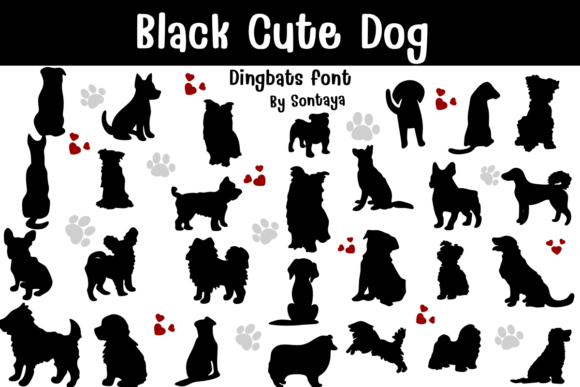
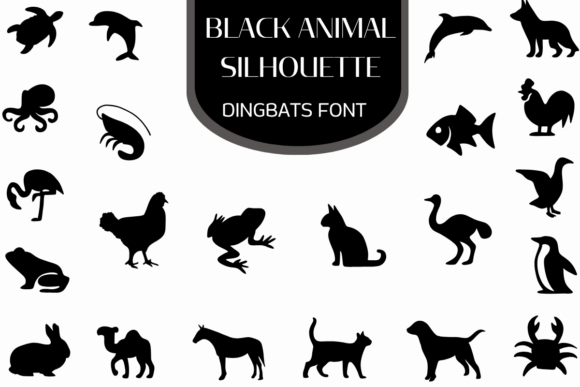
At its core, Black Animal Silhouette is a comprehensive dingbats font—yet it transcends traditional expectations of symbol fonts. Unlike generic icon sets rendered as SVGs or PNGs, this collection is engineered as OpenType glyphs, meaning every animal silhouette behaves like text: scalable without loss, adjustable via CSS, accessible through proper semantic markup, and fully compatible with responsive typography workflows. From dolphins gliding through aquatic-themed dashboards to foxes anchoring forest conservation campaigns, each glyph is hand-crafted using clean, geometric contours—designed for recognition at 12px and impact at 120px.
What distinguishes Black Animal Silhouette from clip-art alternatives is its consistency of visual language. A hummingbird shares the same stroke weight, negative-space balance, and proportional rhythm as a sea turtle or a timber wolf. This coherence transforms isolated icons into a unified visual vocabulary—critical when building brand systems where tone, trust, and thematic continuity matter more than decorative flourish.
Aligning With Evolving Creative and Business Priorities
The rise of Black Animal Silhouette reflects deeper shifts across design, marketing, and development disciplines. Consider three converging trends:
- Design Systems Demand Scalable, Semantic Assets: As organizations adopt component-based UI frameworks (like those built in Figma, Storybook, or React), designers need assets that integrate natively—not as external dependencies. Because Black Animal Silhouette functions as a font, it loads with the rest of the typography stack, avoids additional HTTP requests, and inherits global styling rules (e.g., color, size, line-height) without custom JavaScript or CSS overrides.
- Sustainability and Biophilic Branding Are No Longer Niche: Consumers increasingly align with brands that signal ecological awareness—not through vague slogans, but through tangible visual cues. A bakery using otter silhouettes on compostable packaging, or an edtech platform illustrating biodiversity modules with precisely rendered ferns and amphibians, leverages Black Animal Silhouette to embed authenticity into interface elements—not as ornamentation, but as narrative reinforcement.
- Small Teams Need High-Impact Efficiency Without Compromise: Freelancers crafting Shopify themes, indie publishers designing nature newsletters, or sustainability startups building investor decks rarely have dedicated illustration resources. Black Animal Silhouette delivers production-ready, licensable, and legally safe imagery—no attribution required, no usage caps, no risk of copyright entanglement. It compresses weeks of asset sourcing and style-guiding into a single, well-documented typeface file.
Why Designers and Marketers Are Choosing It Now
It’s not just about availability—it’s about timing. In 2024 and beyond, attention economies reward speed *and* substance. Users scroll past cluttered interfaces in under 1.7 seconds; stakeholders approve designs based on how quickly they “get it.” Black Animal Silhouette answers that pressure with immediacy rooted in biological familiarity: humans recognize animal forms faster than abstract shapes—a cognitive advantage designers can now deploy typographically.
Take an environmental NGO launching a campaign around marine protected areas. Instead of commissioning custom illustrations for each species featured—or stitching together mismatched icons from free repositories—they apply Black Animal Silhouette to label interactive maps, annotate infographics, and animate micro-interactions. The dolphin glyph appears consistently in headers, data labels, and hover states—not as a repeated image, but as a styled character. That uniformity builds subconscious trust: the audience perceives cohesion, professionalism, and intentionality—even before reading a word.
Similarly, artisanal brands—from ceramic studios referencing local wildlife to organic skincare lines highlighting native flora and fauna—use Black Animal Silhouette to bridge tactile and digital experiences. A hand-pressed business card might feature a debossed fox silhouette; the same glyph appears identically on the brand’s website, email footer, and Instagram highlight cover. That cross-medium fidelity strengthens brand recall and reduces production friction—no re-tracing, no asset conversion, no version drift.
Practical Integration Across Real Workflows
Integration is seamless—but its impact multiplies when aligned with modern practices:
- In Web Development: Declare the font via
@font-face, then insert glyphs using Unicode values or ligature-enabled class names. Pair with CSS variables for dynamic color theming—e.g.,--accent-color: #2a5d34;applied globally ensures all animal silhouettes shift to a forest-green tone during Earth Month promotions. - In Print & Packaging: Embed the font in Adobe InDesign or Affinity Publisher files. Because glyphs are vector-based and resolution-independent, they reproduce flawlessly on kraft paper labels, embossed stationery, or large-format posters—no pixelation, no rasterization artifacts.
- In Data Visualization: Use animal glyphs as categorical markers in charts—replacing standard dots or bars with species-appropriate silhouettes (e.g., owls for “nocturnal data points,” bees for “pollinator metrics”). When paired with accessible color contrast and screen-reader-friendly
aria-labelattributes, these become inclusive, memorable data anchors.
Beyond Decoration: A Tool for Ethical Visual Storytelling
There’s growing scrutiny around how visual assets represent the natural world—not just aesthetically, but ethically. Generic, cartoonish animal icons often flatten ecological nuance or unintentionally exoticize species. Black Animal Silhouette avoids that pitfall by prioritizing anatomical plausibility within minimalist constraints. Its octopus has eight distinct, tapered arms; its red panda balances facial markings and tail ring count with scientific accuracy—subtle, yes, but meaningful to educators, conservation communicators, and culturally aware audiences.
This attention to fidelity supports broader movements toward responsible design: reducing visual noise, honoring subject matter, and eliminating lazy symbolism. When a climate tech startup illustrates carbon sequestration pathways using precise mycelium and tree root glyphs—not generic “green” icons—it signals rigor. That alignment between form and function resonates with stakeholders who prioritize evidence-informed communication over superficial branding.
Looking Ahead: Typography as Environmental Interface
As digital spaces grow more immersive—from spatial web interfaces to AR wayfinding in botanical gardens—the demand for lightweight, expressive, and ecologically literate visual elements will only intensify. Black Animal Silhouette doesn’t anticipate that future by adding 3D models or animations. Instead, it prepares for it by doing one thing exceptionally well: delivering timeless, adaptable, and deeply considered representations of life on Earth—encoded as text.
That’s not nostalgia for analog simplicity. It’s strategic restraint. In an era of bloated design systems and fragmented asset libraries, choosing a single, authoritative source for nature-based iconography is itself a forward-looking decision—one that saves time, sharpens messaging, and honors the subjects it represents.
Whether you’re sketching wireframes for a wildlife sanctuary app, finalizing a grant proposal for reforestation work, or selecting typography for a children’s ecology podcast, Black Animal Silhouette offers more than convenience. It offers clarity with conscience, efficiency with empathy, and design authority rooted not in trend, but in enduring form.